Calm Your Nervous System in Minutes
If you prefer to listen to the blog post, you can do that here 👆
You know that specific kind of tired where your body is exhausted, but your mind is vibrating at a million miles an hour? You have just closed the laptop on your 9-to-5. You want nothing more than to step outside, enjoy the beautiful evening, and spend an hour working on your personal business goals without feeling completely exhausted. Instead, you find yourself sitting on the couch, staring at the wall, completely stuck.
When you are juggling a career with building a business, and trying to maintain a personal life, it is incredibly easy to live in a state of constant stress. We tend to view this as a time management problem. We think, "If I just find a better productivity app or a tighter schedule, I will feel better."
But it is not a time problem. It is a biological regulation problem.
If your baseline energy is low and your body feels chronically unsafe, no amount of time management will make you productive. To change your mental state, you have to stop trying to think your way out of anxiety and start using your physical body to flip the switch from stressed to calm. In this blog post, you will learn exactly how to use simple, biology-backed physical resets to shift your body out of survival mode and regain control in less than five minutes.
What It Actually Means to "Calm Your Nervous System"

To understand why you feel so overwhelmed after a long day, it helps to look under the hood at your autonomic nervous system. This system acts as your body's unconscious control center, operating primarily in two distinct modes:
The Sympathetic Mode (The Accelerator): This is your survival engine, responsible for the fight-or-flight response. It pumps out cortisol and adrenaline to help you meet a threat. In modern life, your brain treats a passive-aggressive email or a mountain of unread notifications exactly like a physical predator. Your heart rate climbs, your breathing gets shallow, and your brain hyper-focuses on the immediate problem.
The Parasympathetic Mode (The Brakes): This is your rest, digest, and explore state. When this mode is active, your muscles relax, your digestion functions properly, and your brain is free to think creatively, solve complex business problems, and actually connect with people.
[STRESS TRIGGER] ---> Sympathetic Mode (Fight-or-Flight) ---> Creative Brain Shuts Down
[PHYSICAL RESET] ---> Parasympathetic Mode (Rest-and-Digest) -> Strategy & Clarity Return
Here is the trap most ambitious women fall into: we try to use logic to calm down, telling ourselves, "Just calm down, it is fine, you just need to finish this one thing."

But your nervous system relies on ancient biology. It does not care about your positive self-talk. When you are stuck in fight-or-flight, your brain actively shuts down the pathways for creative thinking and long-term planning to save energy for immediate survival. To change your mental state, you must speak the language your nervous system actually understands: physical sensations. You have to use your body to tell your brain that you are safe.
3 Low-Lift Biological Resets
You do not need a weekend retreat or an hour-long meditation practice to regulate your body. When you are busy, your well-being needs to be low-lift and practical. Here are 3 resets to help calm your nervous system in minutes:
1. The Panoramic Horizon Glance

When we are stressed or working intensely, our eyes naturally lock into a narrow, focused view. Staring at a laptop screen or a phone screen can imply to your brain that you are tracking an enemy or dealing with an immediate crisis. It sustains the stress loop.
To break this pattern, change your visual field completely:
Step outside onto a balcony, or simply stand directly by a window.
Soften your eye muscles and intentionally look at the furthest point on the horizon.
Do not focus on one specific object like a single leaf or a building; let your eyes take in the wide periphery, noticing the trees, the sky, or the open space around you.
Doing this for just 60 seconds activates panoramic vision. Neuroscientists have found that this wide visual field instantly tells the brain stem to stop releasing stress chemicals, because your survival brain concludes that if you can see your entire surroundings clearly and no danger is approaching, you must be safe.

2. The Physiological Sigh
When we feel overwhelmed, our breathing naturally becomes shallow and trapped in the upper chest. This limits oxygen intake and keeps our heart rate elevated. Trying to take a standard "deep breath" can sometimes feel restrictive when your chest muscles are tight from anxiety.
Instead, use a breathing pattern called the physiological sigh, which is the fastest real-time tool discovered by behavioral biologists to lower autonomic arousal:
Take a deep, swift breath in through your nose.
Right at the very top of that breath, sneak in one more sharp, short inhale to completely top off your lungs.
Hold it for a split second, and then let out a long, slow, audible sigh through your mouth.
Repeat this sequence exactly three times.
That second, tiny inhale pops open the microscopic air sacs in your lungs (called alveoli) that collapse when you are stressed. This sudden influx of oxygen allows your body to dump carbon dioxide efficiently on the long exhale, immediately dropping your heart rate and bringing a sense of physical ease.
3. The Temperature Shock

If your mind is looping in circles and you feel completely trapped by mental paralysis, you need to break the neural loop with a physical circuit breaker.
Splash freezing cold water directly onto your face, or take a cold shower/swim
Maintain this intense sensory contact for a minimum of 30 seconds.
This rapid shift in temperature activates the mammalian dive reflex, an evolutionary survival mechanism. Your body naturally assumes you are submerging into cold water, which immediately slows down a racing heart, shifts blood flow back toward your core organs, and quiets a hyperactive mind. It acts as a hard reset button for your focus when you feel too overwhelmed to even attempt a breathing exercise.
Chronic vs. Acute Stress (And Why Time Matters)
To truly solve the problem of calming your nervous system in minutes, we have to distinguish between two types of stress: acute stress and chronic stress.
Acute Stress ───> Solved in minutes via physical resets
Chronic Stress ──> Solved over time via lifestyle changes
Acute Stress
This is the sudden surge of adrenaline you feel when you open an email containing a difficult request, or when you look at your schedule and realize you have double-booked yourself. This is an immediate, sharp response. The three physical resets listed above are designed specifically for this moment. They function as a biological emergency brake, stopping the immediate adrenaline spiral so you can think clearly again.
Chronic Stress
This is the dangerous, invisible background noise. It is the result of working your 9-to-5, skipping lunch, jumping straight into business tasks, and sleeping poorly for weeks on end. Your body adapts to this high-pressure state, making an elevated heart rate and shallow breathing your new normal.
When you are under chronic stress, a single two-minute reset will give you temporary relief, but your system will quickly rubber-band back to high alert. To prevent this, you have to use these short exercises consistently to train your body that relaxation is safe, slowly lowering your baseline anxiety over days and weeks.
How to Fit These Resets Into Your Daily Routine

The secret to avoiding burnout is not waiting to do these exercises until you are already having a complete meltdown. The secret is using them as "buffers" throughout your day to manage your energy before it drops into the red zone.
Think of your personal energy like a car battery. If you drive thousands of miles without stopping to check the alternator, the battery eventually stops working completely. But if you give it small, consistent charges, it keeps running smoothly.
Try implementing one of these micro-resets right at 5 PM. Use it as a clean, non-negotiable boundary line between your day job and your entrepreneurial life. By spending two minutes signaling safety to your body before you move into your evening tasks, you shake off the residue of the workday. You can then open your laptop to work on your business, or sit down to a healthy dinner, feeling grounded and present instead of vibrating with tension.

Common Questions About Nervous System Regulation
How long does it take to calm your nervous system?
You can initiate a shift from the sympathetic (stress) to the parasympathetic (calm) state in less than 60 to 120 seconds using physical triggers like the physiological sigh or panoramic vision. While full recovery from chronic stress takes time, immediate physical relief happens in minutes.
Why can't I just think my way out of anxiety?
When your body enters a fight-or-flight state, the prefrontal cortex, the part of your brain responsible for logic, decision-making, and rational thought, is temporarily sidelined to prioritize survival. Because the brain is responding to physical signals of stress, you must use physical signals of safety to reverse it.
What is the fastest way to lower your heart rate during stress?
The fastest biological method to lower your heart rate is the physiological sigh (two deep inhales followed by a long, slow exhale). This pattern activates the vagus nerve, which directly signals the heart to slow down its beats per minute.
Take the Next Leap Beyond Overwhelm

Learning to manage your physical responses to daily stress is the foundation of creating a lifestyle where you can grow your business without burning out. But changing the underlying habits and lifestyle structures that cause the overwhelm in the first place requires a clear, step-by-step roadmap.
You can download my free Overcome Overwhelm Guide to get practical, actionable strategies for balancing your health, your career, and your business goals without the overwhelm.
Inside the guide, you will find:
Time Management for Real Life: Methods to identify what truly matters and create a schedule that works for a busy woman.
Nutrition for Sustained Energy: Quick recipes that keep you focused and prevent energy crashes.
Movement That Fits: Quick activity breaks you can integrate into your day without feeling like another chore.
Rest and Relaxation: A calming evening routine for deep sleep and simple environment tweaks.
Stress Management: Practical tools to find peace in busy moments.
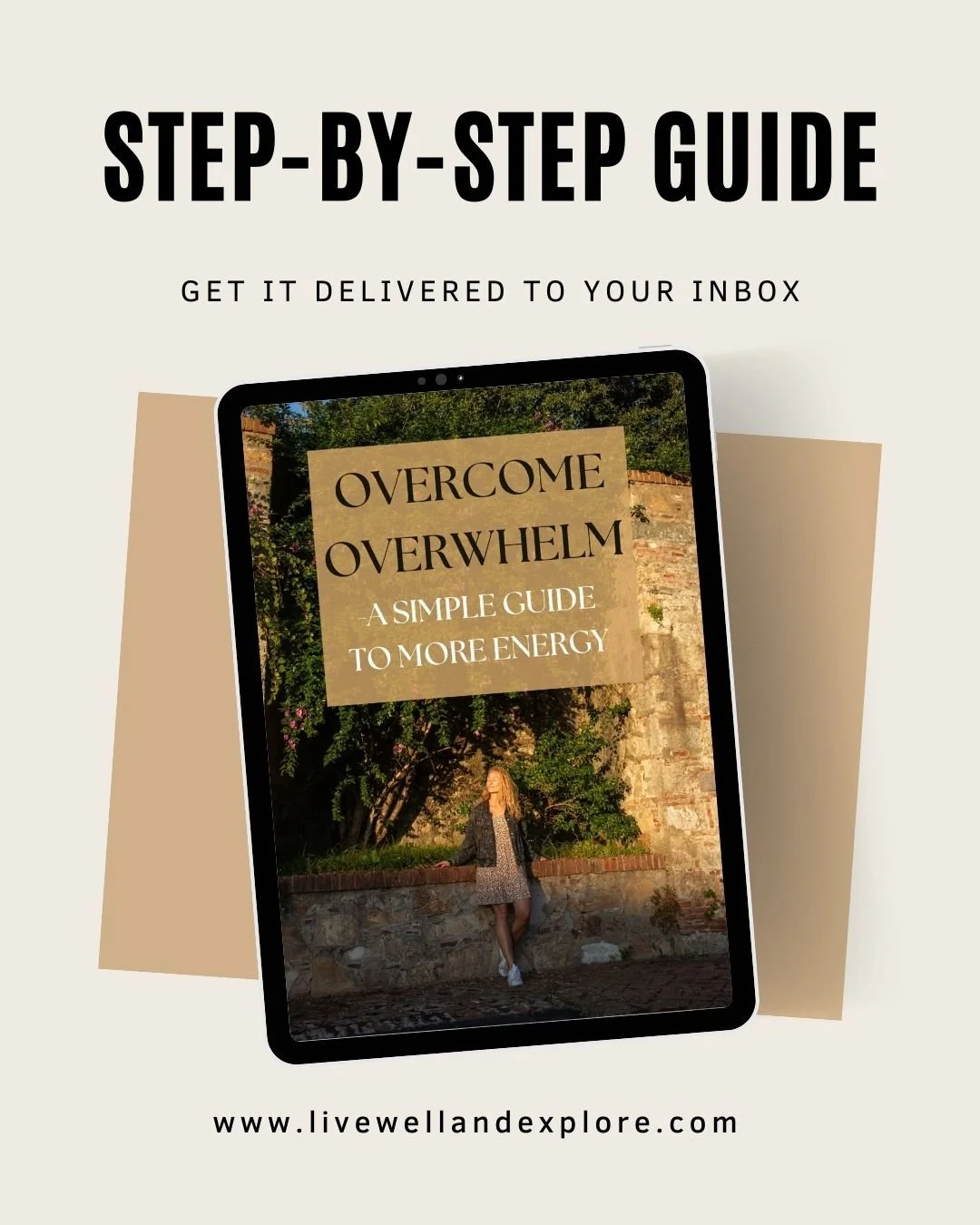
This guide is designed for busy women. If you do not have time to read, you can listen to the audio format during your commute, while doing chores, or while taking a walk. You don't have to struggle alone.
